
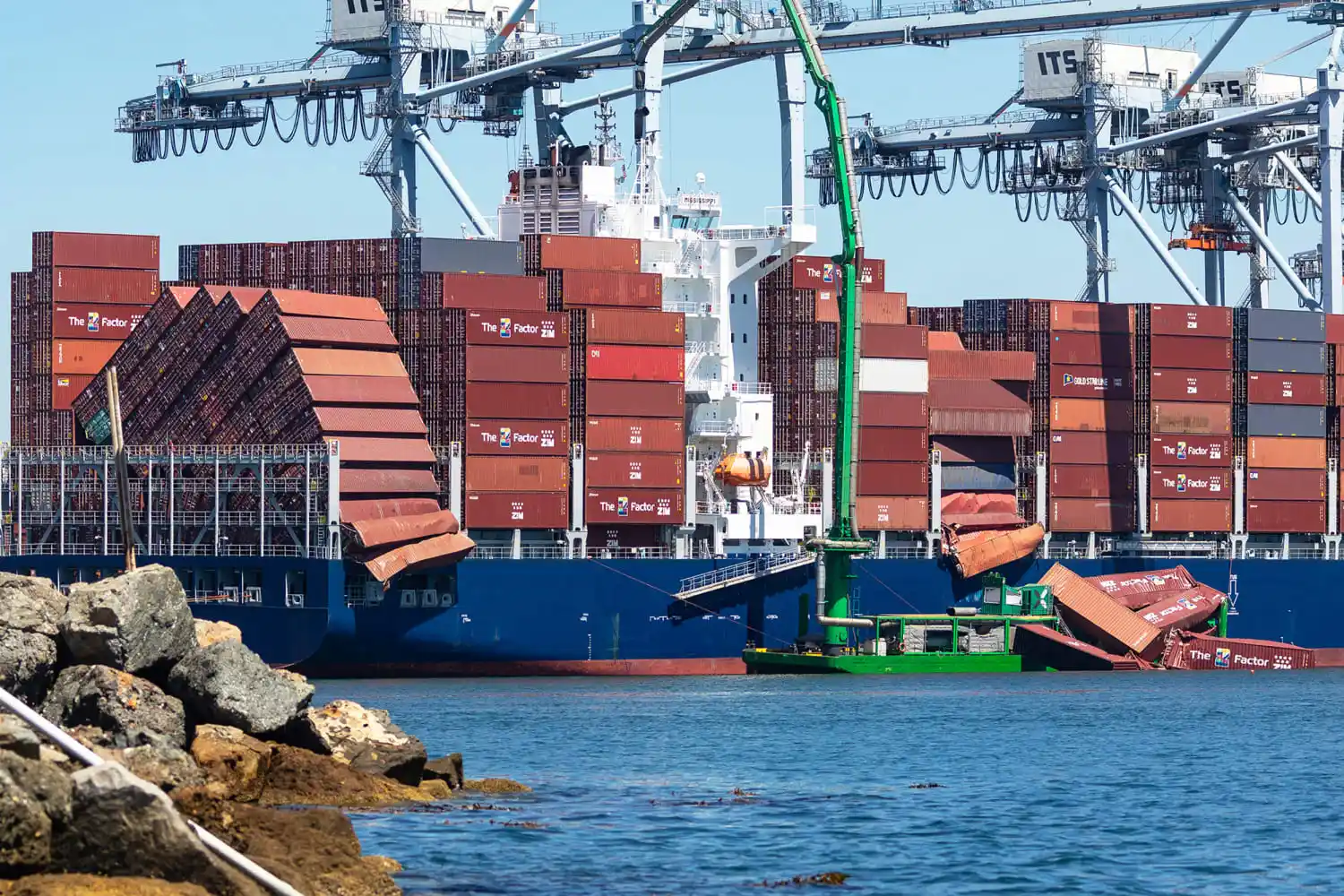
The Port of Long Beach’s largest container spill on record occurred on September 9th, 2025–the MV Mississippi saw 67-75 shipping containers fall overboard and into the harbor–affecting business customers across the United States.

While some containers splashed into the water, others hung precariously. Operations at Port of Long Beach’s Pier G halted while crews worked to secure the situation.
Although the sustained injuries were minor, the ripple effects of this event extend far beyond the docks—and they carry important lessons for brands that rely on imported packaging.
Table of contents
- The fragility of global supply chains
- How import disruptions impact brands
- Why relying on overseas packaging is risky
- Turning import risks into opportunity
- Building a resilient future together
The fragility of global supply chains
The MV Mississippi had just arrived from Yantian, China—one of the world’s busiest export hubs—fully loaded with thousands of TEU (twenty-foot equivalent units ) brimming with containerized goods destined for American shelves.
It was an otherwise routine berthing at Pier G in the Port of Long Beach on September 9, 2025, until a sudden stack failure triggered the MV Mississippi container spill, sending 67–75 containers tumbling overboard into the harbor waters.
The port—handling nearly 15% of U.S. containerized imports—responded fast. The U.S. Coast Guard, NTSB, and ILWU teams contained hazards and has already recovered over 50 containers, but the days-long disruption highlighted supply chain fragility.

For importers of packaging and other essentials, the MV Mississippi container spill exposes the business communities vulnerability to overseas shipping. From lost shipments to delays and escalating costs–this event serves as an important reminder and opportunity to bake better resilience into global business supply chains.
How import disruptions impact brands
When containers are lost at sea, damaged in port, or tied up in customs, the consequences for brands can be severe:
Product loss
Entire packaging runs can be destroyed if containers are compromised in transit, turning months of planning into underwater wreckage. For instance, a single MV Mississippi-style incident could wipe out thousands of custom boxes or labels, forcing brands to scramble for alternatives.
Customs delays
Even undamaged cargo can be held for inspection amid heightened scrutiny post-disruptions, delaying launches and fulfillment schedules by weeks. This bottleneck not only stalls inventory but also frustrates partners waiting on just-in-time deliveries.
Unexpected costs
Replacement shipments often require expensive air freight or rush production, ballooning budgets by 2–5x the original expense. Brands hit with these surprise fees, as seen in port mishaps, must then justify the hit to stakeholders or pass it to consumers.
Missed deadlines
Seasonal promotions, retail launches, and marketing campaigns hinge on packaging being ready on time, and import hiccups can derail them entirely. A delayed container means missed Black Friday slots or holiday unboxings, directly tanking sales and brand buzz.
Disruptions like the container collapse at the Port of Long Beach don’t just delay goods—they erode profits and competitive edges in a fast-paced market.
Why relying on overseas packaging is risky
The MV Mississippi container spill highlights several logistical vulnerabilities that brands face when depending on overseas packaging manufacturers:
Overreliance on imports
Heavy dependence on offshore packaging sources increases exposure to global disruptions–from port strikes to geopolitical flare-ups that halt entire routes. Brands locked into foreign suppliers, as with the MV Mississippi’s China-sourced cargo, find themselves vulnerable to cascading delays that ripple across seasons.
Environmental and compliance risks
Containers may carry inks, coatings, or substrates flagged for environmental or regulatory concerns. These can spark scrutiny or outright bans upon arrival.
Post-incident inspections, like those following the Long Beach spill, can uncover non-compliant materials, leading to fines or redesigns that strain resources.
Insurance and complexity
Mishaps raise insurance premiums and create added compliance hurdles, as underwriters hike rates for high-risk import-heavy operations.
Navigating these layers—claims filings, audits, and policy tweaks—can divert focus from core business and turn what should be routine sourcing into a bureaucratic nightmare.
In an era of volatile trade and climate pressures, these exposures can turn a single shipment into a strategic liability.
Turning import risks into opportunity
The MV Mississippi container collapse serves as a pivotal moment for brands to pivot from vulnerability to strength–transforming import risks into a competitive edge through smarter, more resilient sourcing strategies.
Work with local partners
Balancing offshore options with U.S.-based packaging suppliers adds security and predictability, creating a hybrid model that hedges against global shocks. This diversification ensures steady supply even when international lanes falter.
Build strategic inventory
Stockpiling high-value packaging ensures launches aren’t derailed by shipping delays, acting as a buffer against the unpredictable tides of ocean transit.
Brands that maintain domestic stockpiles can weather disruptions without panic orders, keeping timelines intact.
On-demand production
Local partners like ours can produce and deliver packaging quickly, reducing the need for long lead times or risky overseas shipments.
This agility turns potential bottlenecks into seamless workflows, with runs completed in days rather than months.
Faster speed-to-market
Working with U.S.-based packaging suppliers eliminates customs delays and long ocean freight schedules, ensuring product launches stay on track.
In a market where timing is everything, this edge means hitting shelves first and capturing early buzz.
Reduced environmental impact
Localized packaging reduces the carbon footprint of shipping goods across oceans, helping brands meet sustainability commitments with tangible proof. By shortening supply chains, companies can tout greener credentials that resonate with environmentally-conscious consumers.
Quality assurance close to home
Domestic suppliers allow for easier press checks, faster sampling, and tighter quality control—giving brands more confidence in every run. Proximity means spotting issues early, avoiding costly recalls and delivering flawless packaging that elevates the unboxing experience.
By embracing these shifts, companies not only safeguard operations but also unlock efficiencies that boost bottom lines and customer loyalty.
Building a resilient future together
The Long Beach container spill incident is a reminder that global supply chains are unpredictable—and that relying solely on imported packaging can leave brands exposed.

By diversifying suppliers, investing in local partnerships, and building supply chain resilience, companies can turn potential disruptions into opportunities for greater stability and growth.
If you’re considering strengthening your local packaging supply manufacturing partners, please reach out to our team.
We look forward to playing our part in building resilient supply chains together!